

You’ve probably heard of Lapland, but do you know where it is? Also, is it even a proper country? And is it covered in snow all year?
Many travellers search for “Lapland” when planning a trip to the far north of Scandinavia. But the reality is a little more complex. The region commonly called “Lapland” stretches across northern Norway, Sweden and Finland, and overlaps with Sápmi, the traditional homeland of the Indigenous Sámi people.
Today, the word “Lapland” is still widely used in tourism. However, many Sámi prefer Sápmi, which reflects their culture, history and identity. This guide explains where the region is, how the borders work, and what visitors should know before travelling there.
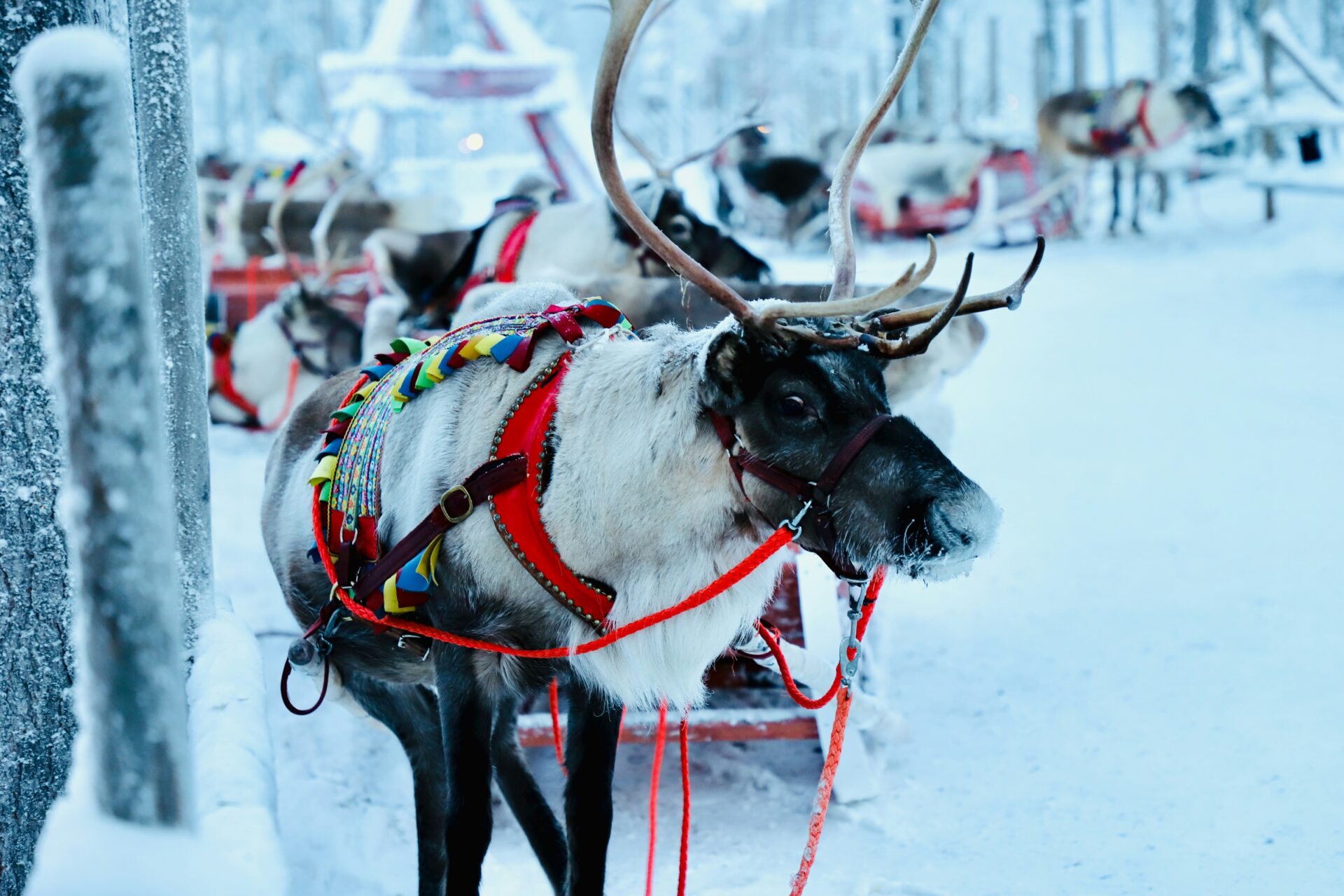
In this blog you’ll learn more about the region. We’ve also added some fab fun activities and tours that you can do.
Where is “Lapland” located?
Lapland is a large region in northern Europe, much of which lies within the Arctic Circle. It covers an area of around 100,000 square kilometres – about the size of Belgium, Holland and Switzerland put together!
The region is bordered by the Norwegian Sea to the west, the Barents Sea to the north, and the White Sea to the east. So, if we look at the map below, we can see that Sápmi is the area marked in yellow. It stretches across the north of the Scandinavian peninsula.
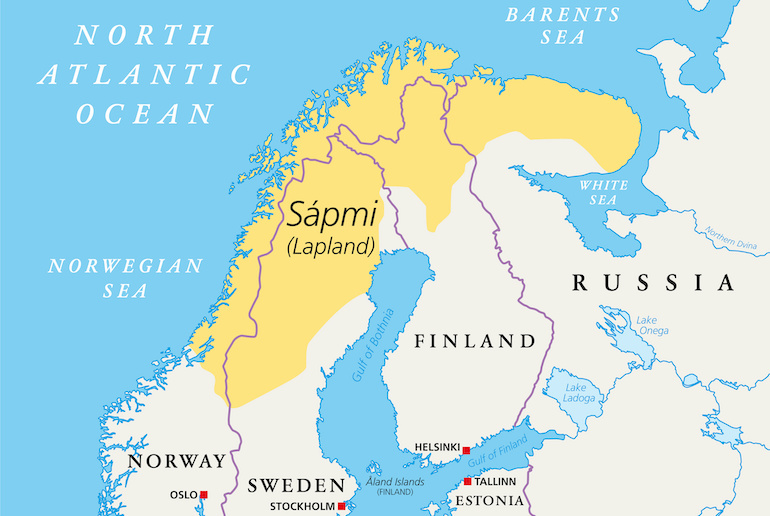
Sápmi: the traditional homeland of the Sámi
Sápmi stretches across northern Norway, northern Sweden, northern Finland and the Kola Peninsula in Russia.
It is not defined by national borders. While modern countries divide the north into Finnish, Swedish and Norwegian Lapland, Sámi culture extends across all of these areas. Visitors can learn about Sámi traditions in places like Inari (Finland), Jokkmokk (Sweden) or Karasjok (Norway), all of which have long been cultural centres for Sámi communities.
Is it a real place? And how many Laplands are there?
“Lapland” is a commonly used name for the northernmost parts of Norway, Sweden, Finland and Russia. But it’s not a political or unified region. Each country administers its own northern territories, which together form the broader area travellers often associate with this name.
So you may hear terms like Swedish Lapland or Finnish Lapland, referring to the parts of the region that fall within Sweden or Finland. In Norway, the equivalent northern area is often linked with Finnmark, although that is an administrative region rather than a cultural definition.
Finland’s northernmost province is also officially called Lapland (Lappi in Finnish), covering roughly a third of the country’s land area. This is an administrative unit and represents only one part of the wider northern region.
Sweden also has a historical province called Lappland, which covers large parts of the country’s far north. Today it’s not an administrative region. Instead, its territory is governed through Norrbotten County (and a small section of Västerbotten County). However, the name Lapland is still widely used in cultural and tourism contexts.
Is “Lapland” a derogatory term?
The word comes from Lapp, a historical label used by outsiders for the Indigenous Sámi people. Today, this term is widely considered outdated and, for many Sámi, insensitive.
Their traditional homeland is called Sápmi, a cultural region spanning large parts of northern Norway, Sweden and Finland, as well as the Kola Peninsula in Russia. When referring to Sámi culture, lands or history, Sápmi is the appropriate and respectful term.
In tourism and administrative contexts, “Lapland” is still used — especially in Finland. But when speaking about Indigenous culture or the wider northern region, using Sápmi helps avoid misunderstandings and shows awareness of the area’s history and identity.
Who rules Sápmi?
The Sámi do not have a sovereign state, so governance depends on the laws of Norway, Sweden and Finland. Each country has a Sámi Parliament, elected by Sámi voters, which represents Sámi interests in areas such as language, culture and traditional livelihoods. These parliaments, however, have limited decision-making power and act mainly as advisory bodies.
Current situation
- Norway
Has the strongest formal framework for Sámi rights. It is the only Nordic country to have ratified ILO Convention 169. Authorities must consult the Sámi Parliament on issues affecting Sámi communities. - Finland
The constitution protects Sámi cultural and linguistic rights, and the government is required to negotiate with the Sámi Parliament on relevant matters. Its recommendations are not binding. - Sweden
The Sámi Parliament is both a state authority and a representative body, but its political influence is limited. Sweden has not ratified ILO Convention 169.
In short: the Sámi have a recognised political voice in all three countries. However, their autonomy remains restricted, and discussions about expanding Sámi self-determination continue.
Is there a Sápmi flag?
Yes, the Sámi flag was approved as the official flag of Lapland in August 1992. It was designed by Sámi artist, Astrid Båhl.
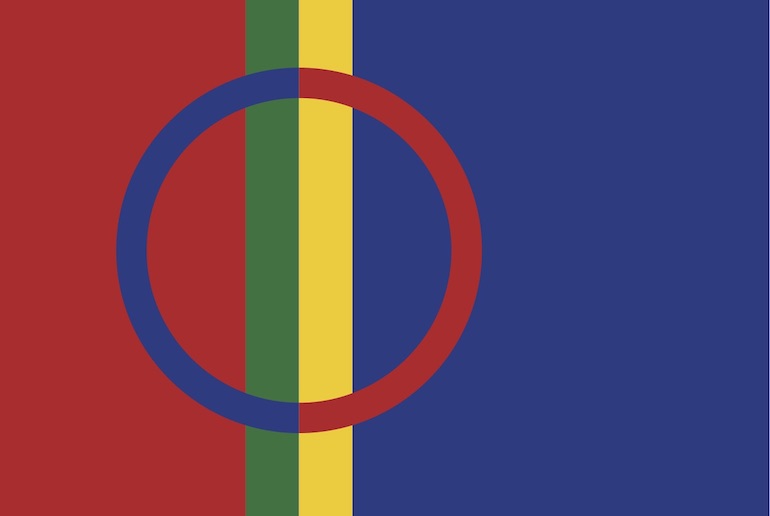
Its colours – red, blue, green and yellow – represent the Sámi national costume, with green symbolising nature, blue water, red fire and yellow the sun.
Who actually lives in Sápmi?
The Sámi, of course, are the original inhabitants but there are also large settlements within the region where citizens of Norway, Sweden, Finland and Russia live.
What are the biggest cities in Lapland, and what can you do there?
Although the largest northern settlements are technically on the Russian side of the Kola Peninsula, most travellers explore the Scandinavian part of the region — in Finland, Sweden and Norway. Below are some of the main towns in Sápmi that you can actually visit, along with up-to-date population figures and ideas for things to do.
Just click on the links below for more info about the towns and some ideas of cool things to do in Lapland.
Rovaniemi, Finland ~64,000
The capital of Finnish Lapland and a major gateway to the Arctic. Visit Santa Claus Village, explore the Arktikum museum, enjoy winter activities or use the city as a base for trips deeper into the north.
Tornio, Finland ~22,000
A border town linked with Haparanda in Sweden. Offers easy access to Bothnian Bay and quiet, low-key Nordic urban life.
Tromsø, Norway ~77,000
One of the largest cities in the Arctic. Known for the Northern Lights, whale-watching, fjord cruises and a lively cultural scene. A popular winter destination with direct international flights.
Bodø, Norway ~56,000
A coastal hub just south of Sápmi, but commonly included in northern itineraries. Offers access to the Lofoten Islands, strong coastal Sámi heritage and excellent hiking nearby.
Alta, Norway ~20,000
Known for rock carvings (a UNESCO site), winter sports, and relatively stable northern-lights conditions thanks to its dry climate.
Kiruna, Sweden ~23,000
Sweden’s northernmost town, famous for the ongoing relocation of its entire centre due to mining. A base for Icehotel trips, Abisko National Park and northern lights tours.
Gällivare, Sweden ~17,500
Close to national parks like Muddus and Stora Sjöfallet, and one of the best areas to experience Sámi culture and reindeer herding traditions.
Jokkmokk, Sweden ~2,700
A small but culturally important town in Sápmi, known for its centuries-old Jokkmokk Winter Market. It is one of the most significant Sámi gatherings in the region. It’s a great place to learn about Sámi traditions, visit Ájtte — the Swedish Mountain and Sámi Museum — and explore nearby hiking routes in Laponia, a UNESCO World Heritage area.
If you want to explore Sámi regions beyond the major towns, the Wilderness Road (Vildmarksvägen) offers a spectacular drive through South Sámi landscapes, reindeer herding areas and high mountain plateaus.
What’s the climate like?
Since most of Lapland lies within the Arctic Circle, the climate is – unsurprisingly – cold! However it’s a large area, so the climate varies within it.
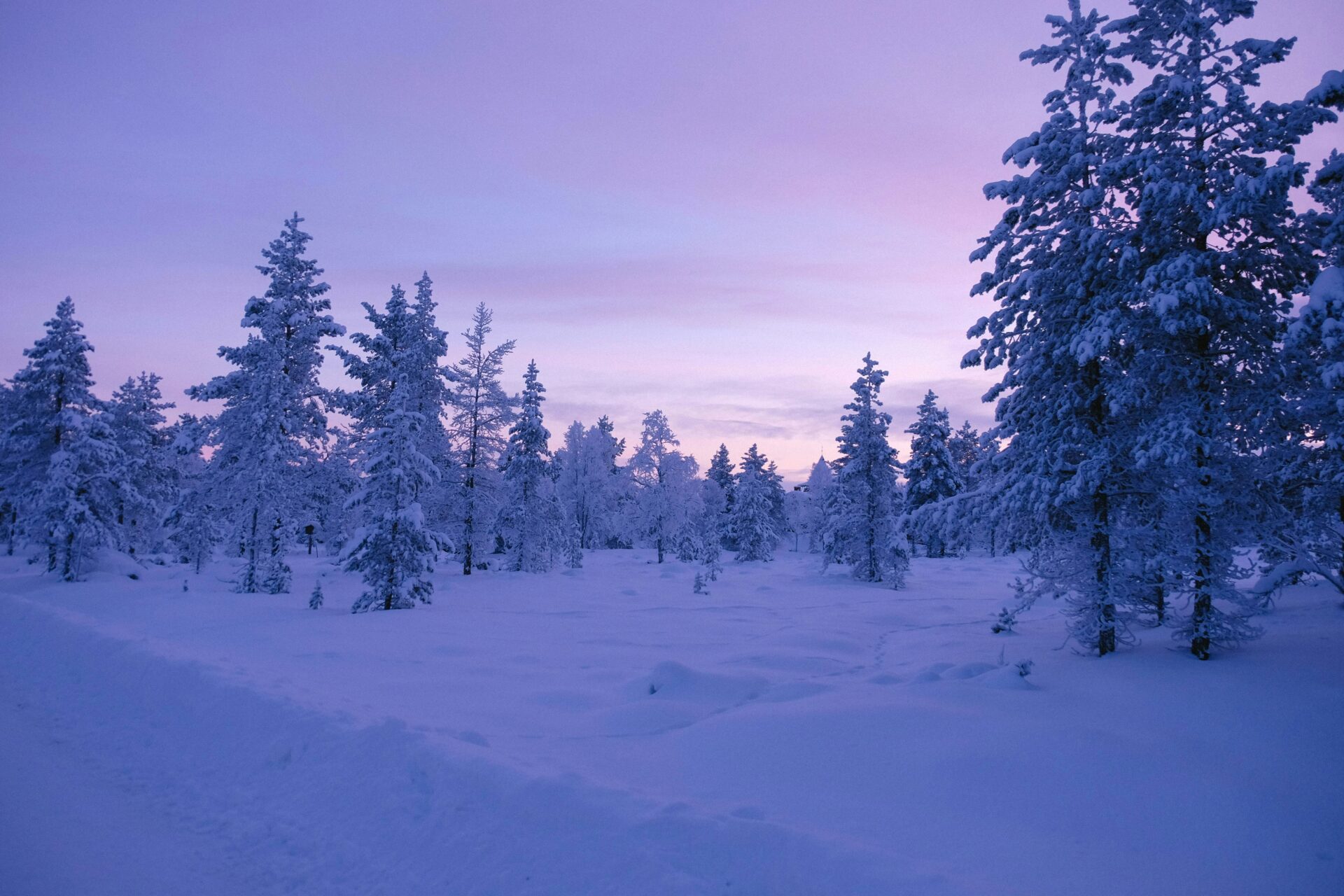
Finnish Lapland, for example, has a subarctic to continental climate, with relatively mild summers and long, cold, snowy winters.
Sápmi gets snow from as early as September through to April, with peak snow cover being in January and February.
And its average temperatures range from about 10–15ºC in summer to -16–3ºC in winter, though they can go as low as -30ºC!
What is Laponia?
Laponia, or the Laponian area, is a region of pristine wilderness in Swedish Lapland that includes four national parks and two nature reserves.
With primeval forests, marshes, lakes and mountains, its rich biodiversity has been granted Unesco world heritage protection.
And what is Finlandia?
Finlandia is a piece of music written by the Finnish composer Sibelius in support of the Finnish free press to protest against the censorship of the Russian empire.
It’s also the name of a brand of Finnish vodka!
What are the Lapland Mountains?
The Lapland Mountains is just another name for the Scandinavian Mountains, along with the Kjølen or Kölen mountains.
Is it easy to travel around Sápmi?
Since much of Lapland is remote wilderness, it’s hard to access the more off-the-beaten track parts without your own transport.
Some of the larger cities have train connections, such as Kiruna in Sweden which has direct trains from Stockholm, and Rovaniemi in Finland which has direct trains from Helsinki.
However, the easiest way to really explore the area is on a guided tours. Read on to book some of our favourites!
What are some of the best things to see and do in Sápmi?
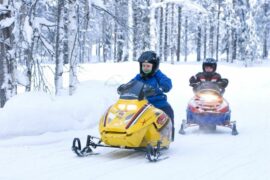
Sápmi is a great place for adventure sports, such as this snowmobile safari from Tromsø in Norway or this snowshoe and ice fishing trip from Kiruna in Sweden.
It’s also a good region for wildlife tours. You can ride on a reindeer sleigh or drive a husky sled from Rovaniemi in Finland, and even go whale-watching from Tromsø.
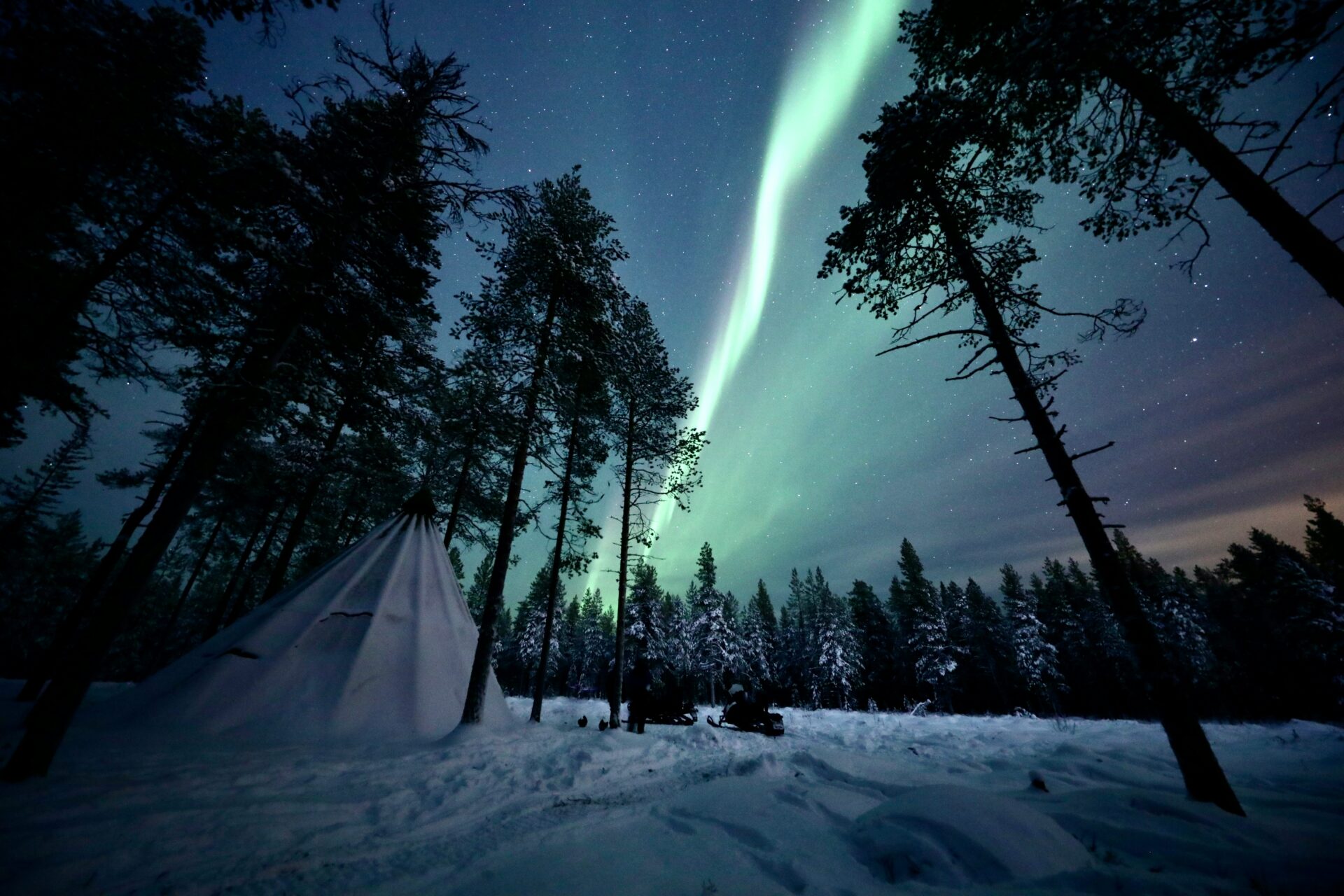
And since Lapland is in the Arctic Circle all three countries offer great opportunities to see the northern lights in winter, such as this northern lights photo tour from Abisko in Sweden.
Visiting Lapland – FAQs
Can you visit Sápmi?
Yes, you can easily visit Sápmi in Norway, Sweden and Finland. Visiting Russian Lapland is more problematic at the moment.
Can you visit Sápmi on your own?
If you rent a car (for more info, see our guides to renting in Sweden and Norway) you can visit Lapland independently, though if you’re going in winter make sure you and your vehicle are well-equipped for snow and harsh weather conditions.
Can you do Sápmi in a day?
Bearing in mind how far north Lapland is compared to the Scandinavian capitals, it would be a shame to come all this way and just spend a day.

To make the most of the region, you want to factor in enough time for a few activities, such as a husky trip, a reindeer sleigh ride or a snowmobile tour.
Is Sápmi safe to visit when you’re pregnant?
Sweden, Finland and Norway all have good healthcare facilities, so there’s no reason why you shouldn’t visit Sápmi while pregnant.
Obviously, you may want to avoid any potentially dangerous sports such as skiing or snowmobiling, but provided you take the usual precautions, you should be fine.
Which airports can you fly to in Sápmi?
There are airports in Kirkenes, Tromsø and Alta (Norway); Ivalo, Kittilä and Rovaniemi (Finland); and Gällivare, Kiruna and Luleå (Sweden).
Can you visit Sápmi without a car?
Yes, you can get a train, a bus or fly to one of the main activity centres and take tours out from there.
Can wheelchair users visit Sápmi?
Yes, Sápmi is generally regarded as having good provision for wheelchair users. Despite the rough terrain and potential snow, there are companies that can provide wheelchair adapted tours and hotels with wheelchair access.
The Friendly Moose in Övertorneå, Sweden is a guesthouse in Swedish Lapland that specialises in trips tailored to people with a range of different abilities.
Can you visit the North Pole from Sápmi?
Not really, no. Although both are within the Arctic Circle, the North Pole lies some 1700 miles north of Lapland.
The nearest settlement to the North Pole is Longyearbyen on Svalbard.
Since the North Pole is in the middle of the Arctic Ocean it’s most usually accessed by boat, though you can ski or go there by dog-sled in winter when the sea is frozen over.
See also:
How to see Swedish Lapland on a budget
Where to stay in Swedish Lapland
Spa experiences in Swedish Lapland




Am watching a video tour of Lapland and realized I sidn t know exactly where it was. I am of Finnish descent, so this made it very interesting to me.