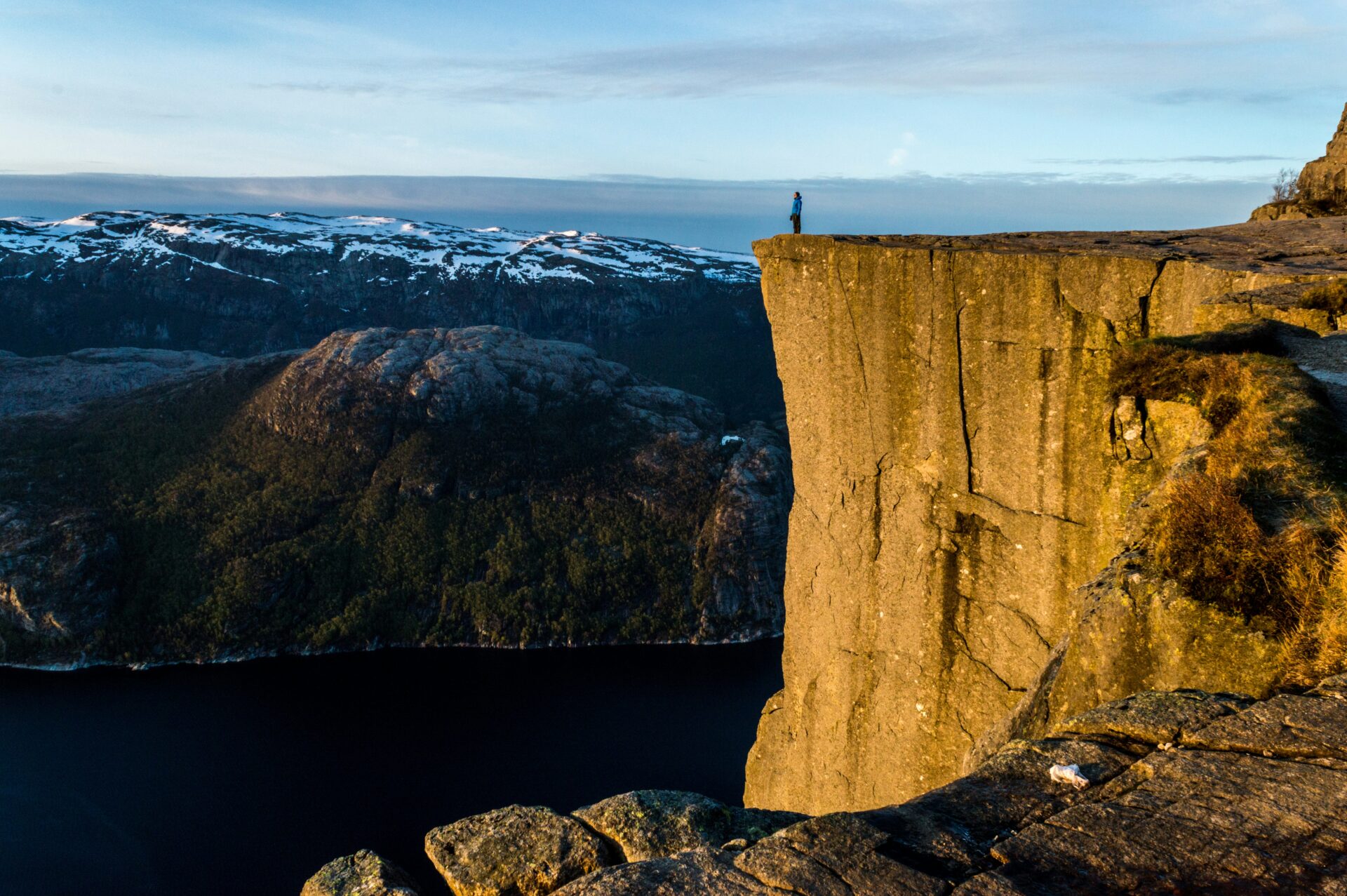
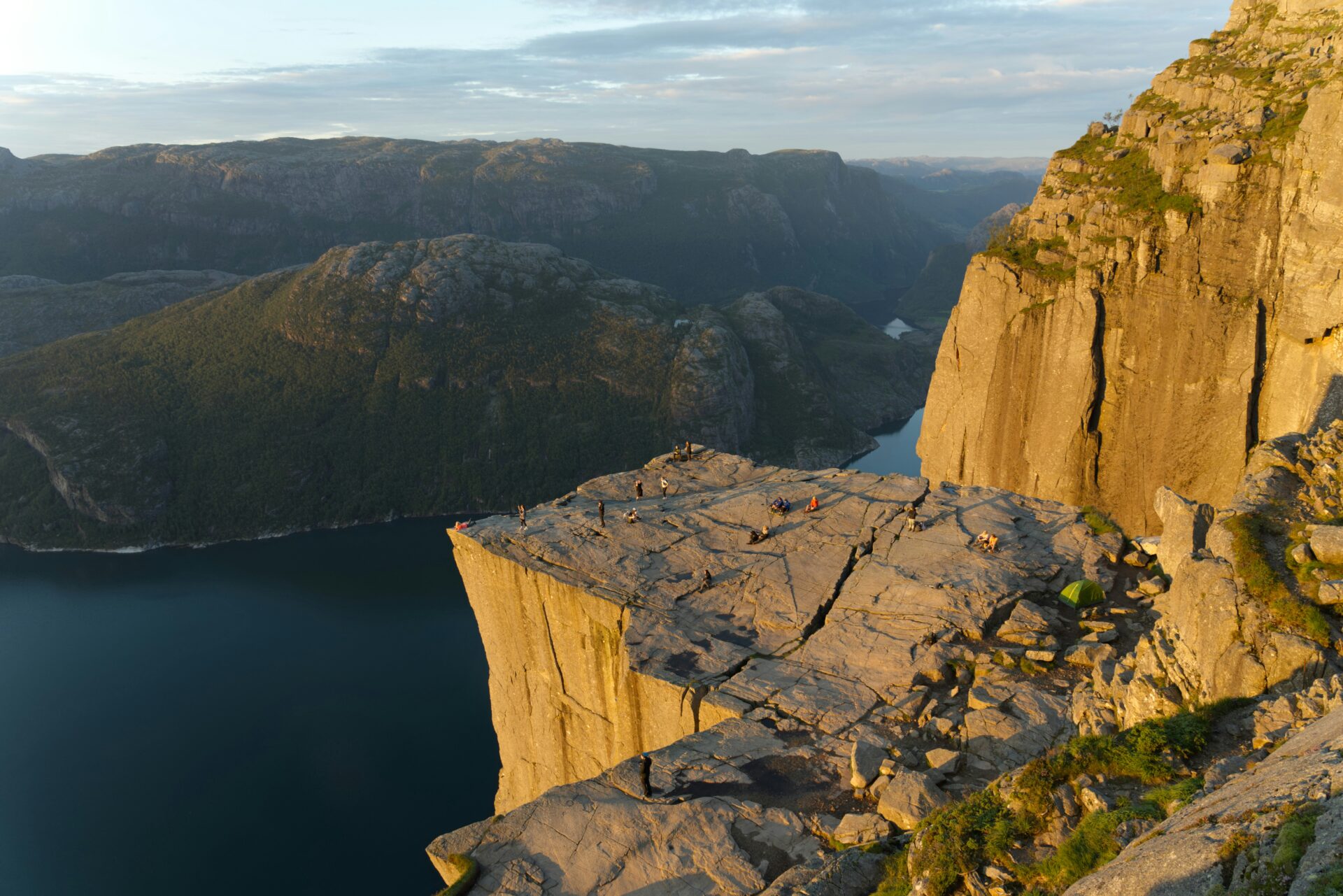
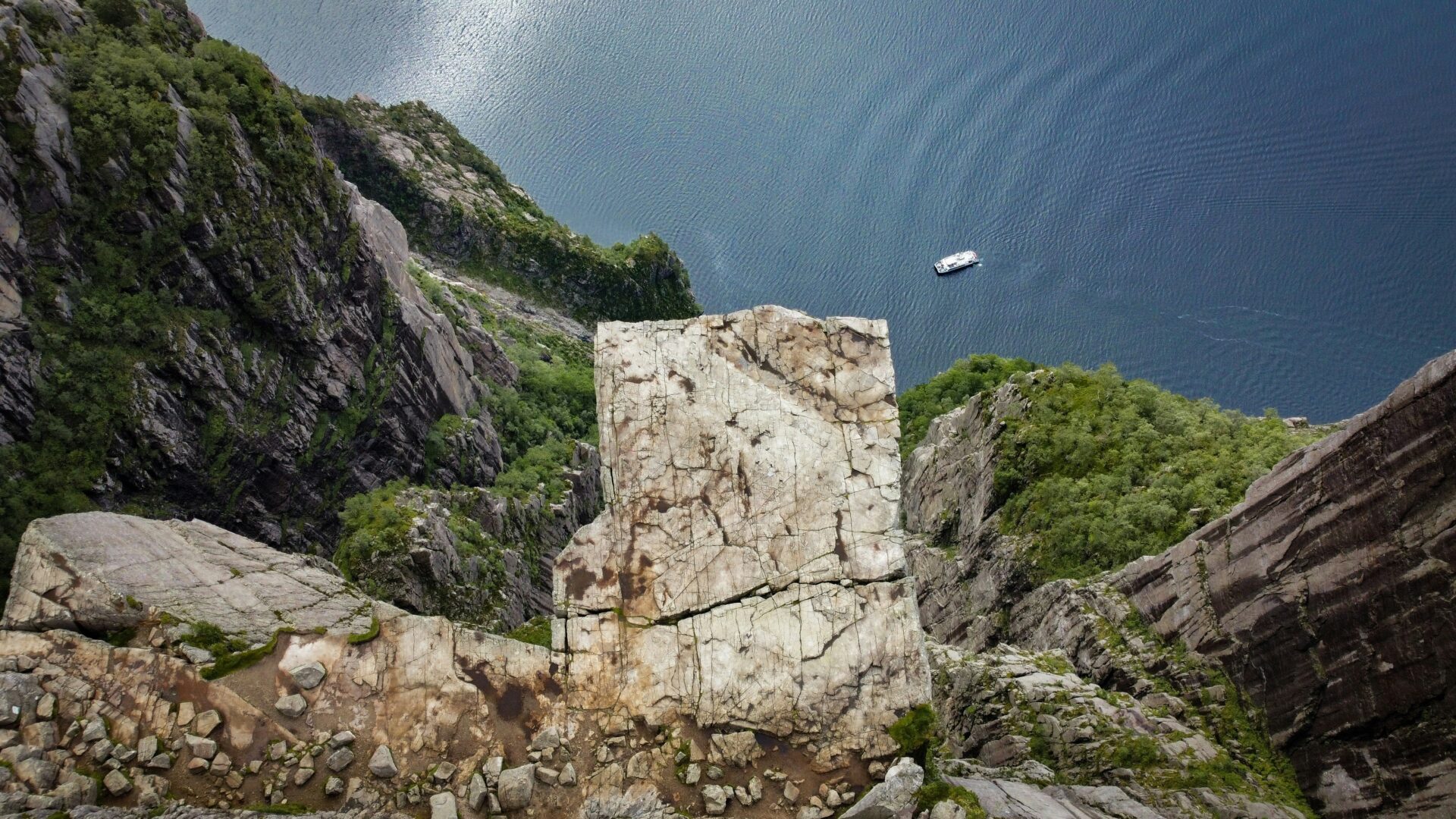
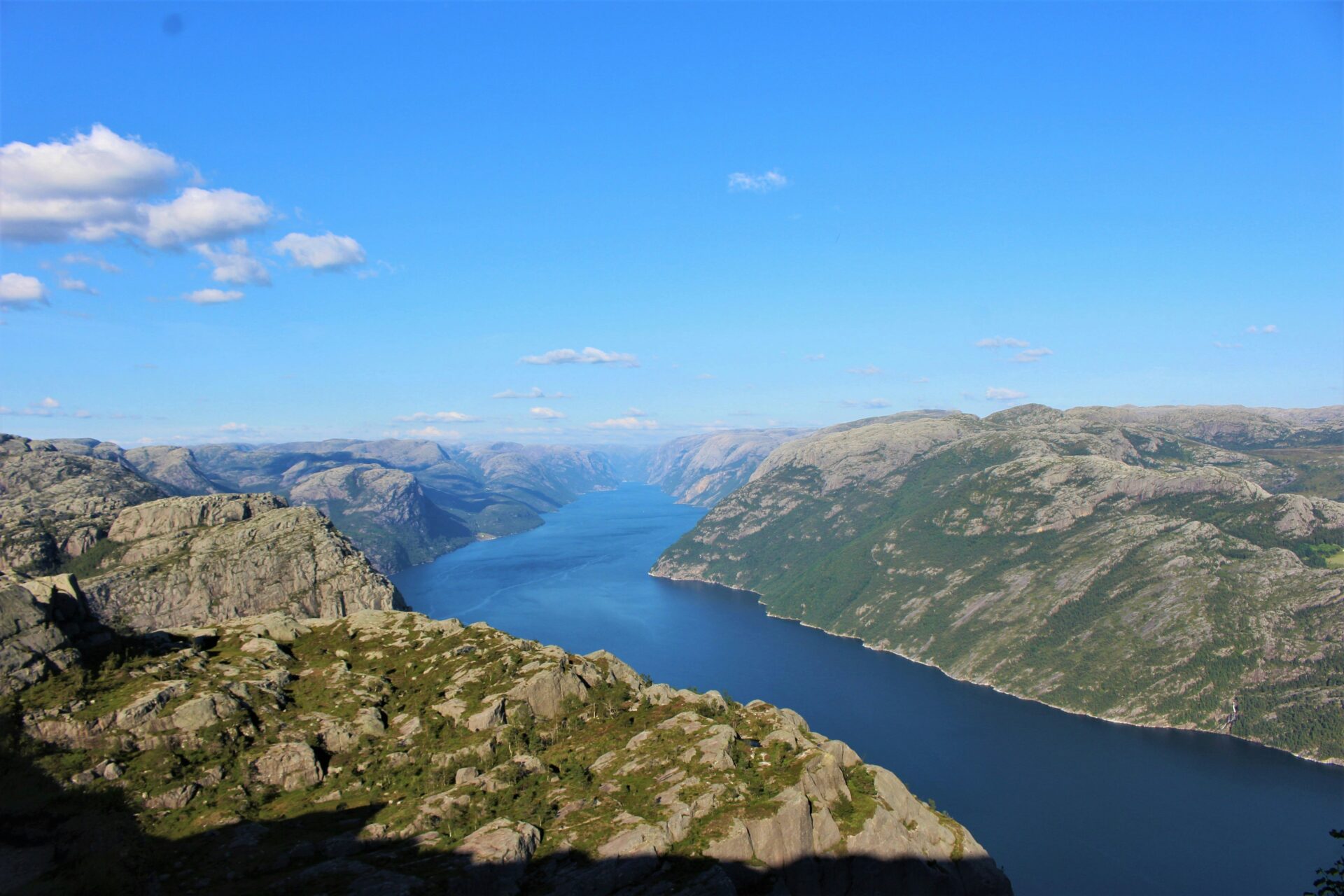
Pulpit Rock, or Preikestolen in Norwegian, is one of Norway’s most famous hikes – and it’s easy to see why. The huge, flat-topped cliff rises 604 metres above the spectacular Lysefjord, with some of the most dramatic views in southwest Norway.
Even if you don’t know the name, you may recognise the rock, as it’s been photographed countless times, with people perched near the edge proudly raising their arms at having reached the plateau.
You may also recall Tom Cruise climbing the cliff face in the final fight scene of Mission Impossible: Fallout. But you don’t have to be a Hollywood star to visit!
Pulpit Rock hike at a glance
- Distance: around 8km return
- Time: around 4 hours
- Elevation gain: around 500m
- Difficulty: moderate
- Height: 604m above Lysefjord
- Trailhead: Preikestolen Parking
- Best time: summer for easiest conditions; year-round with appropriate preparation
Where is Pulpit Rock?
Pulpit Rock is located in Rogaland in southwest Norway, overlooking the Lysefjord around 40km east of Stavanger. Its distinctive flat plateau rises 604 metres almost vertically above the water below.
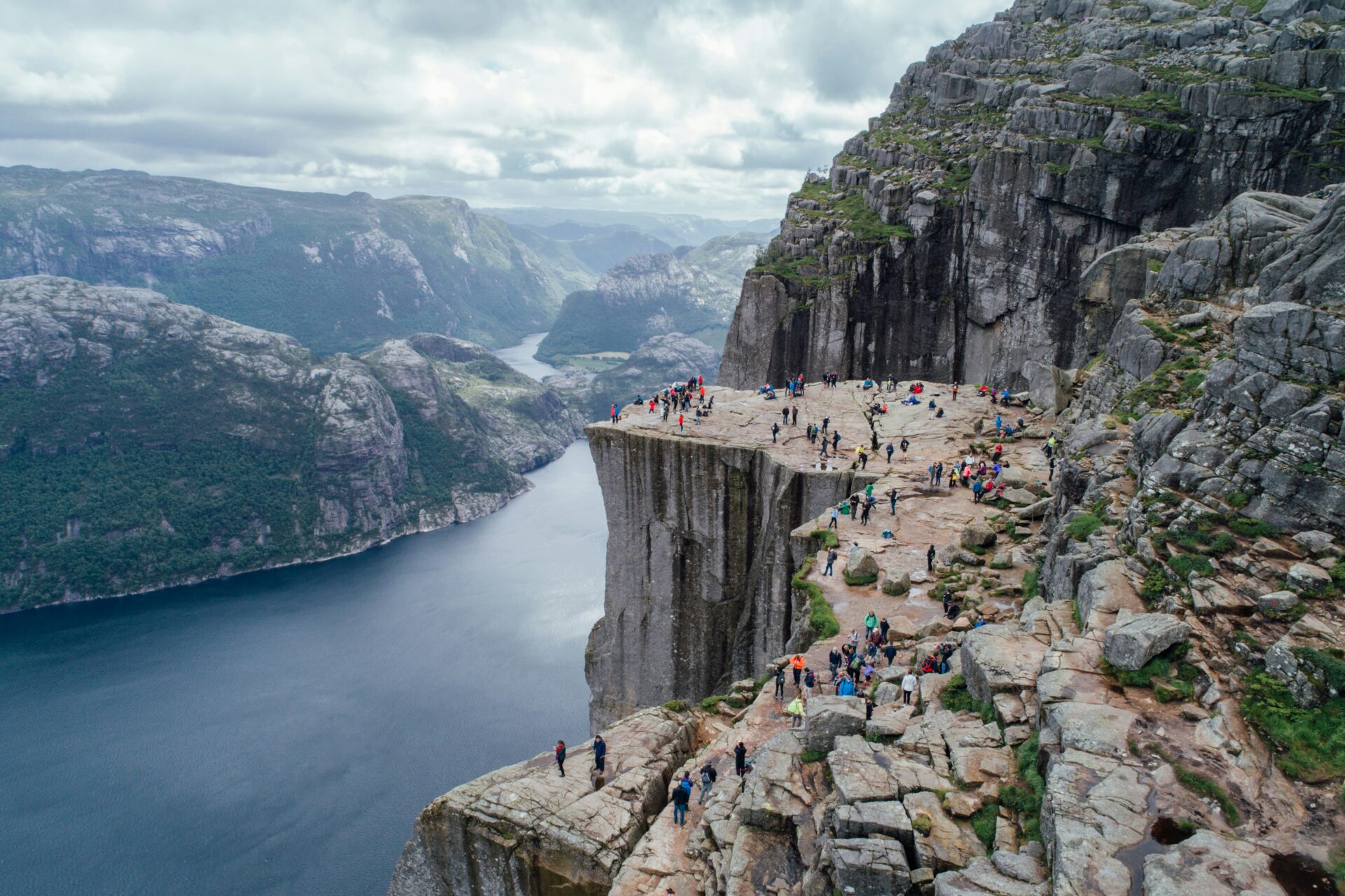
You can hike to Pulpit Rock year-round, although conditions vary enormously with the seasons. Summer is by far the easiest and busiest time to go, while winter hiking requires more experience, suitable equipment and, in difficult conditions, a guide. Make no mistake – this is one of Norway’s most popular hikes, and the trail can get seriously busy on sunny summer days.
How difficult is the Pulpit Rock hike?
The Pulpit Rock hike is officially rated as moderate. You don’t need to be an experienced mountaineer, but you’ll need a reasonable level of fitness and should be comfortable walking over uneven, rocky terrain and tackling some fairly steep sections.
The round trip is around 8km, with roughly 500 metres of total elevation gain, and takes most hikers about four hours. Allow longer if you want plenty of time for breaks, photos and enjoying the views from the top.
The route to Pulpit Rock
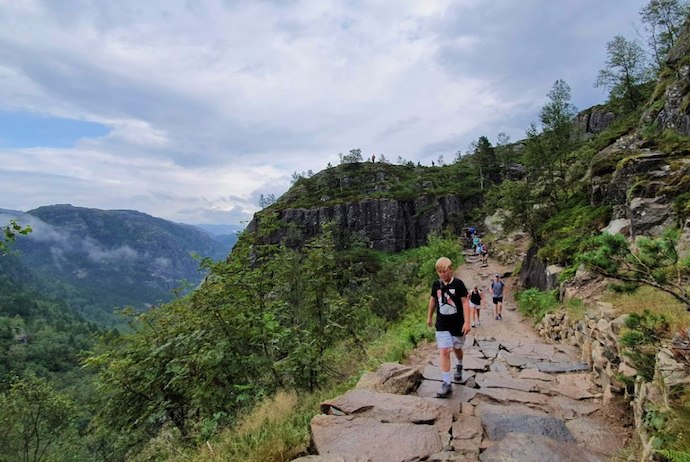
The climb to the plateau usually takes around two hours, following a well-marked trail through forests, marshy areas, rocky terrain and steep stone stairways. Some of the steepest sections have been improved with impressive stone stairways built by Nepalese Sherpas.
The most challenging part of the climb lies between the 1.5km to 2km mark, as you ascend a series of steep rock steps. Other than that, the rocky route undulates relatively gently upwards for most of the approximately 4km-long trail (each way), with the landscapes changing as you make you way up to the summit.
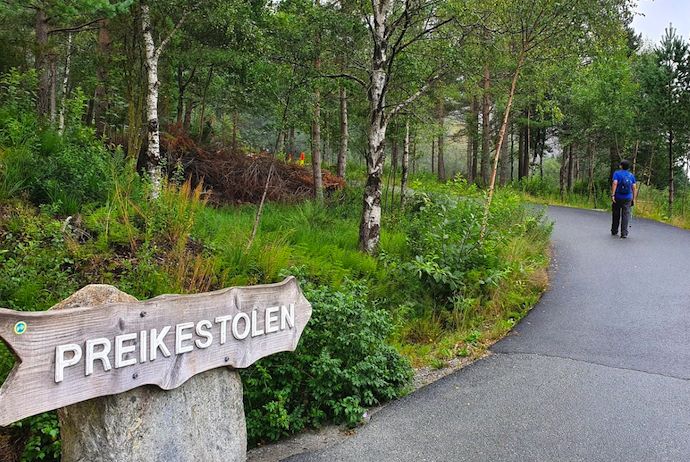
The trail starts at Preikestolen Parking, beside Preikestolen BaseCamp, where you’ll find toilets and other basic facilities before setting off. Use the toilets before you start – there are no toilet facilities along the trail or at the summit.
Expect zen-like forests in the early part – you’ll know you’re around halfway up when you see shallow ponds with ducks paddling in them. As you near the top, you’ll reach granite cliffs that overlook passing cruise ships in the fjord below.
Climbing Pulpit Rock: what you need to know
Even though thousands of people complete the hike every year, don’t underestimate it. Wear sturdy footwear with good grip, bring extra warm and waterproof layers, carry enough food and water, and check the weather forecast before setting off. Conditions can change quickly, and wet rocks can become very slippery.
There’s no barrier along most of the cliff edge, so take particular care near the top – especially in strong winds, rain or fog.
June, July and August are the busiest months, particularly on sunny weekends. For a quieter hike, the official Preikestolen organisation recommends setting off before 8am or later in the afternoon. Long summer daylight makes a late start surprisingly practical.
Narrow parts of the route can get clogged with hikers as a result, but practise the spirit of giving way and you’ll be fine. Civic courtesy applies at the summit as well – everyone wants a shot of themselves near the edge, and a queue will form organically. Be nice and don’t jump the queue!
Getting to Pulpit Rock
Stavanger is the most convenient base for hiking Pulpit Rock. Since the opening of the Ryfast tunnel system, getting to the trailhead has become much easier and there’s no longer any need to take the old Stavanger–Tau ferry route.
By ferry and bus
During the main hiking season, direct buses run between Stavanger and Preikestolen Parking. Another option is to take a public bus to Jørpeland and continue by taxi to the trailhead. Services are more limited outside the main season, so check connections before setting off.
By car
Driving is one of the easiest options. From Stavanger, the route runs through the Ryfast tunnels towards Solbakk and then on to Preikestolen Parking. The car park is open year-round and currently costs 275 NOK for stays of more than two hours.
Combine the hike with a Lysefjord cruise
Want to see Pulpit Rock from above and below? Some tours (like this one) from Stavanger combine the hike with a cruise through the Lysefjord, giving you the chance to look up at the famous cliff from the water before or after tackling the trail yourself.
It’s a long day, but a great option if you’re short on time and want to experience two of the Stavanger region’s biggest attractions in one go.
On a guided tour
You certainly don’t need a guide to hike Pulpit Rock in good summer conditions, but joining a guided hike can take the hassle out of getting there and give you some extra reassurance on the trail.
This guided Preikestolen hike includes pick-up and drop-off at your accommodation in Stavanger, before heading out with an experienced local guide. You’ll follow the main route to the famous plateau and its spectacular views over Lysefjord, with the possibility of taking a quieter alternative trail if conditions allow.
Transport takes you through the impressive Ryfast tunnel system beneath the fjord, so there’s no need to worry about buses, parking or getting yourself to the trailhead. A guided hike is also worth considering outside the main summer season, when changing weather, snow or ice can make conditions more challenging.
When is the best time to hike Pulpit Rock?
Summer is the easiest and most popular time to hike Pulpit Rock. June to August brings long daylight hours and generally better trail conditions, but also the biggest crowds. Late spring and early autumn can be quieter, although the weather becomes less predictable.
Preikestolen is accessible year-round, but winter is a very different proposition. Snow and ice can cover the trail and daylight hours are much shorter, so you’ll need proper winter equipment and hiking experience. If you’re unsure, join a guided winter hike rather than tackling it alone.
Can you hike Pulpit Rock with kids?
Plenty of families hike to Pulpit Rock, but whether it’s suitable depends much more on your child’s hiking experience than their age. The trail is rocky and includes steep sections, while the plateau itself has exposed cliff edges without barriers. Active children who are used to hiking may manage it well, but you’ll need to keep younger kids close, especially near the summit.
What to do near Pulpit Rock
Unless you’re driving past and staying near the start of the trail, chance are you’ll be setting off from Stavanger. Stavanger is one of Norway’s largest cities and makes an excellent base for exploring Pulpit Rock and the Lysefjord.
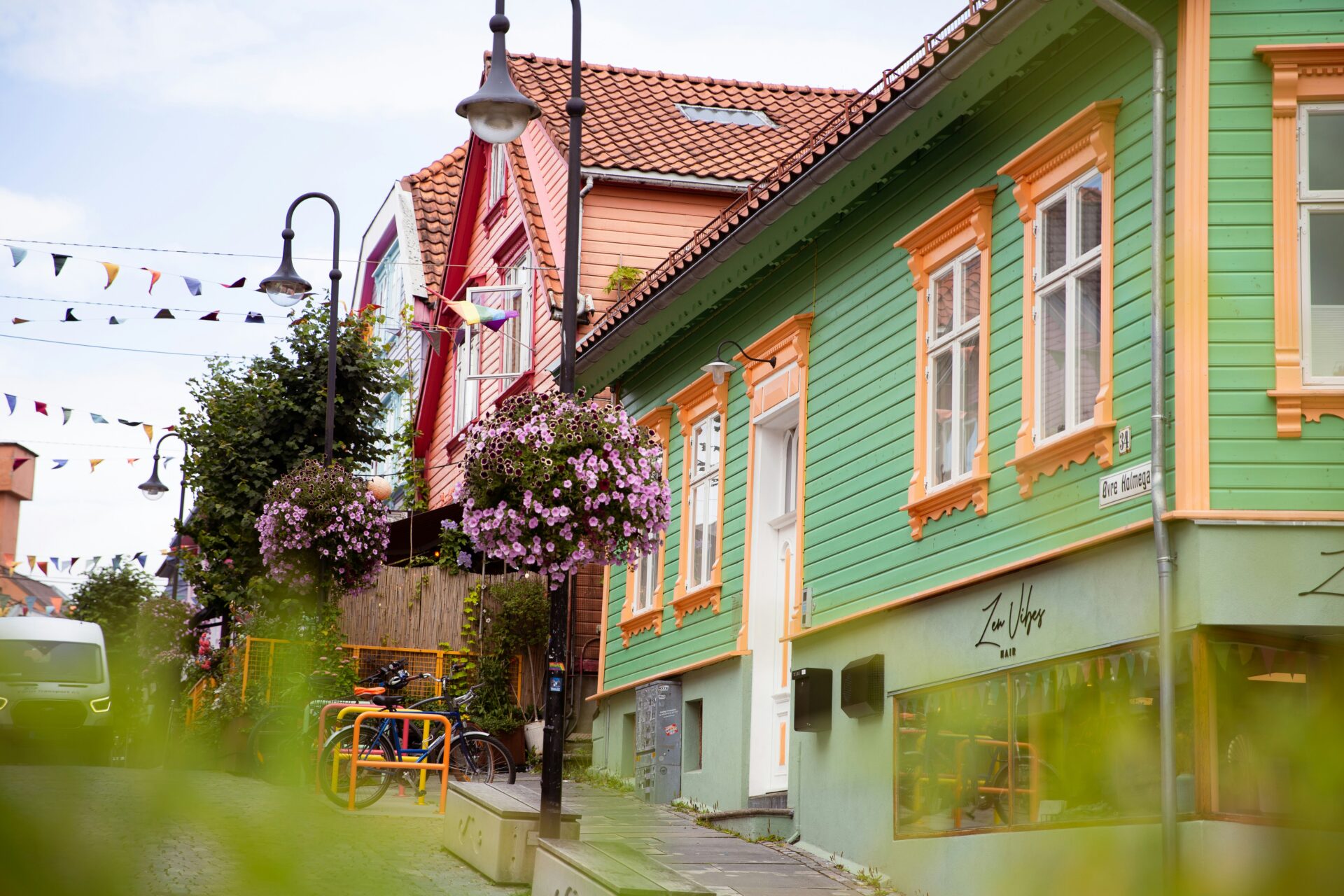
Stavanger is a great place to base yourself for a few days, with plenty to see and do, including one of Norway’s oldest and best-preserved medieval cathedrals. Gamle Stavanger, or Old Stavanger, is also worth exploring with its cobblestone paths, 18th-century wooden cottages, galleries and handicraft shops.
Stavanger also has some surprisingly good museums, including IDDIS – home to the Norwegian Canning Museum and Norwegian Printing Museum – the Museum of Archaeology and the Norwegian Petroleum Museum.
Recommended tour: See Stavanger with a local
Is the Pulpit Rock hike worth it?
Absolutely. Pulpit Rock may be one of Norway’s busiest hikes, but the first glimpse down into the Lysefjord from that famous 604-metre-high plateau still feels pretty special. Come prepared, choose your hiking time carefully and don’t rush the trail. The scenery along the way is part of the experience too.
Have you hiked to Preikestolen, or are you planning to tackle it soon? Share your tips or questions in the comments below!
See also:
8 great hiking tours in Norway
Camping in Norway: the ultimate guide