If you’re planning a trip to Denmark, there’s one thing you might not be expecting: understanding Danish isn’t easy… not even for other Scandinavians.
We’re excited to collaborate with Sigga from Lingua Danica on this guest post. As a Danish teacher, she helps learners speak more active and confident Danish.
At first, the language can sound like people are mumbling, skipping words and blending everything into one long stream of sound — and yes, that’s actually pretty accurate.
If you’re travelling in the Nordic countries, it’s worth knowing that Danish is widely spoken beyond Denmark itself. You’ll also hear it in Greenland and even in parts of northern Germany.
So what makes Danish so difficult to understand? It’s mainly the sound. Even within Scandinavia, people often struggle to follow spoken Danish. But here’s the good news: you don’t need to understand every word to have a great experience in Denmark — you just need to know how to navigate it.

Not pronounced as you would think?
Certain consonant letters sound soft, many endings are reduced, and sounds often blend together rather than being pronounced clearly. Danish can feel like one continuous stream of speech.
Instead of trying to catch every single word, it’s more helpful to focus on the situation and context. Danish communication has an interesting duality: Danes are often very direct when clarity is needed, which can come across as blunt to people from other cultures. At the same time, there is a strong tendency to tone things down linguistically, especially when maintaining good relations or avoiding conflict. As a result, messages may sound softer on the surface, even when the intention is quite clear.
Good news: might sound confusing, but it’s very simple
If hearing Danish often makes you confused, the structure is actually quite clear and direct. Phrases are short and simple, with no unnecessary information. While Danish has politeness phrases and more polite ways of saying certain things, like English, where you try to be polite and add “could you maybe…” or “would you mind…”, Danes often go straight to the point of the conversation, making everything as efficient as possible. This is great for travelling, as you won’t need an extensive vocabulary, just the main words. Just be aware to talk with a friendly tone, and you’re almost sure to come across as polite.

Hidden rules of Danish communication
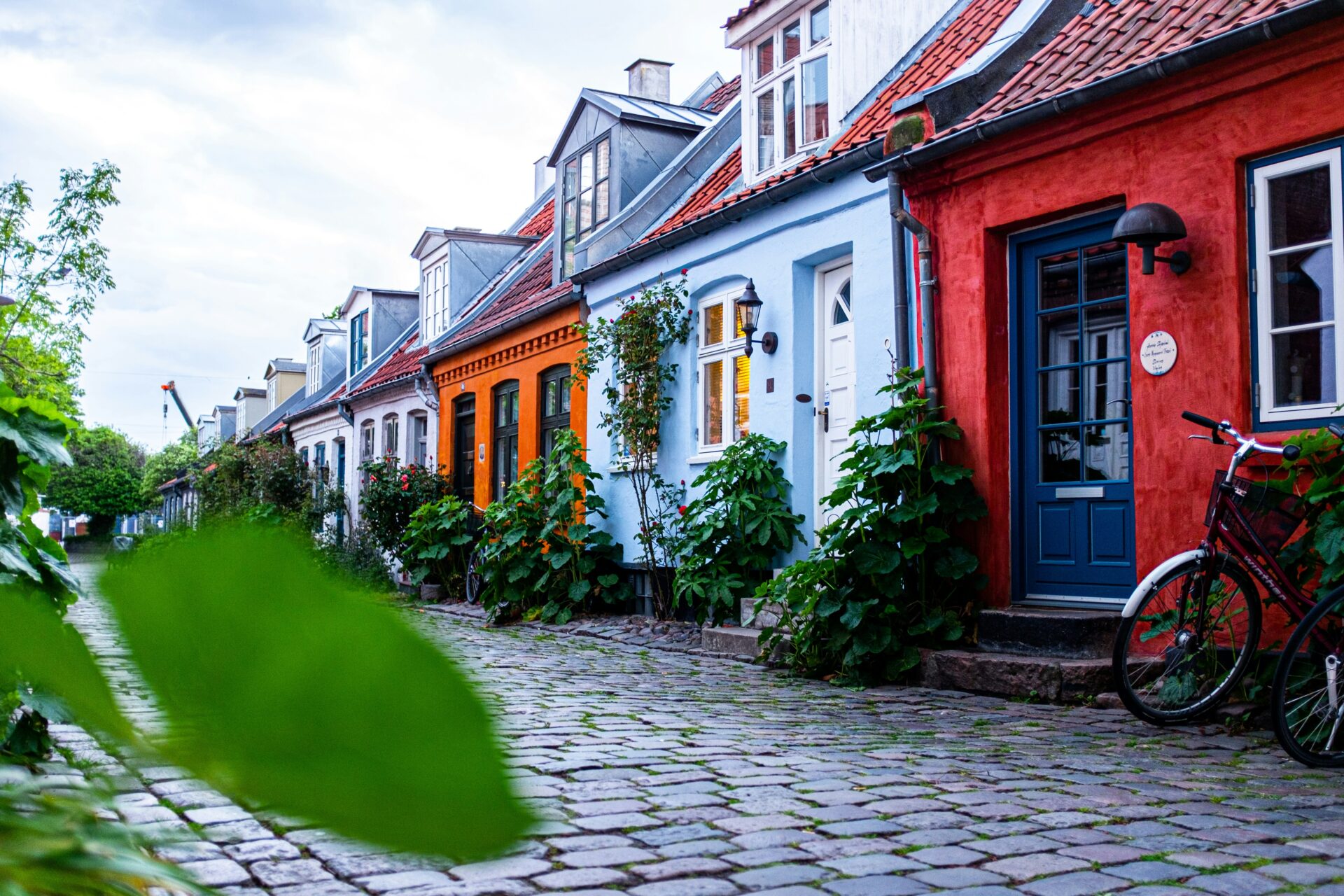
As for every language, if you want to sound like a local, you should know which are the main non-tacit rules of communication: small talk is minimal or even nonexistent, silent moments are not awkward, they are just part of the conversation. Let’s say you walk into a bakery (and I recommend you do, as they are amazing) and say “Hej”, you say what you want, you pay, and you leave. That’s it. No need for a “how are you”, extra conversation, or unpleasant moments where you don’t know what to say.
When you come from a culture where silent moments are automatically filled with small talk, or you actively have to engage in conversation all day long, this might feel confusing. In Denmark, connection is about respecting personal space. At first sight, this can generate a rejection feeling from the Danish society. You enter a coffee place, and there is almost no interaction. No exaggerated smiles, no additional questions, it feels almost like you don’t have any sort of relationship. But this is what the Danes consider a functional interaction. There is no bad predisposition, just what is necessary.
The only Danish words you actually need (trust me)
As you might have already noticed, you just need the main words to move naturally through Denmark. In fact, just a few keywords are enough to handle most of the everyday situations.
Here is my survival kit:
- A basic greeting like Hej (pronounced like the English “hi”, just a bit shorter) is more than enough to start any exchange with locals.
- When you need to say thank you, Tak is a good, simple, and direct option.
- For apologizing or getting someone’s attention, the word Undskyld fits best (pronounced something like ohn skool)
- For short interactions, Ja (“yes”) and Nej (“no”) allow you to respond clearly and quickly.
- If you don’t understand something, just saying jeg forstår ikke (yi fo staw ik) (“I don’t understand”) will signal that you don’t follow, and people will usually switch to English.
- Lastly, to end an interaction, you can just say God dag, a polite and typical way to say bye to staff in shops, restaurants, cafes, etc. as you wish them a nice day: God dag! (go dai) (“Have a nice day!”)
So, no need to have any complex sentence or grammatical stress. Just a few words for the right moment.
Real situations you might actually face: step-by-step
Ordering at a bakery: “Hej” → point or say what you want → “Tak” (done).
Asking for directions: “Undskyld” + simple question in English (we all understand it).
Not understanding something: “Jeg forstår ikke” (they will almost always help you, often in English).
Leaving a shop or a café: “Tak” or “God dag” (simple and natural).
One more step?
Understanding how Danes use their language and how it reflects their culture, can make a real difference to your trip. Once you tune into the rhythm and context, navigating everyday situations becomes much easier.
If you’d like to go a step further, we highly recommend Sigga from Lingua Danica, who offers practical resources to help you build confidence and start speaking Danish more naturally. Happy learning!